
How to keep your car clean inside and out
A part-by-part guide to cleaning a car, with the order to work in, what the paint, wheels, glass, seats, belts and screens each need, and how often each part typically needs it.
- Written by
 The Pcheen Desk
- First published
Items in this guide
- What to lay out before starting
- The order of work
- Paintwork: rinse, wash, dry
- Deposits that do not wait
- Wheels and tyres
- Glass, mirrors and wiper blades
- Wax or sealant: when water stops beading
- Inside: vacuum first
- Seats and belts
- Dashboard, controls and screens
- How often each part needs it
- What each method suits, and what it can harm
- Questions we get
- Sources
We keep notes on a car the way a careful record is kept: one part at a time, with what we look at, what it tells us and what varies from one model to another. This guide applies that method to cleaning. It goes through the whole car, outside and in, in the order of work, and ends with how often each part typically needs attention and what each method suits.
We wrote it from the care chapters of several car makers’ owner’s manuals, from two tyre makers’ care guides, a wiper maker’s factsheet and two references on paint care. They are listed at the end, and the numbers in the tables refer to that list. Where the sources disagree, we say so. Where a step is our own suggestion and no source we read covers it, we say that too. Every interval here is a typical range: the care chapter of your own owner’s manual, and the label of each product you use, give the figure that applies to your car.
What to lay out before starting
Gathering the kit before the water is turned on keeps soap from drying on the paint while a cloth is fetched. Products are named here by type. Any product of the right type will do, as long as its label says it suits the surface.
- A car shampoo: a mild soap made for car paint.
- A wash mitt or a soft sponge, and two buckets.
- A soft brush and a separate cloth for the wheels, and a nylon-bristle brush for the tyres.
- Several clean microfibre cloths.
- A chamois or a drying towel.
- A vacuum cleaner with a narrow nozzle and a soft brush head.
- A glass cleaner.
- For the seats: an upholstery soap for fabric, or a leather cleaner or mild detergent for leather.
Where to work. In shade, with the panels cool to the touch. One manual asks for no washing in direct sun or on a warm body, and another notes that product left to dry on paint in direct sun turns abrasive. The water is lukewarm or cold: one manual names both, and another asks for no hot water.
What we read first. The care chapter of the owner’s manual. It says which methods this model accepts, and the answer varies. One maker’s manual for an open-top model asks for no automatic car washes and no high-pressure water at all. Other manuals allow both, with conditions.
The words we use
- Two-bucket method
- A common way of washing that none of the manuals we read describes: one bucket holds shampoo and water, the other plain water. The mitt is rinsed in the plain bucket before each new load of shampoo, so that grit from the car stays out of the soapy water.
- Microfibre
- A cloth woven from very fine synthetic fibres that picks up dust and holds water. Manuals name it for screens and plastics.
- Chamois
- A soft, absorbent drying cloth, made of leather or of a synthetic material. Several manuals name it for drying paint after a wash.
- Neutral detergent
- A mild detergent that is neither acid nor alkaline. Manuals name it for wheels and for leather.
- Wax
- A paint conditioner that leaves a thin layer on the paint so that water runs off. Waxes are usually free of abrasives and are meant for paint in good condition.
- Sealant
- A synthetic paint conditioner with the same task as wax. Its label says how long the layer usually lasts.
- Polish
- A product that combines abrasives, which take off a very thin layer of the finish, with a protective part.
- Tar remover
- A cleaner that loosens tar and similar spots. It also takes the wax off the patch it touches.
- Water marks
- Spots of minerals that stay on paint or glass when water evaporates from it.
- Clear coat
- The thin, clear top layer of a paint finish, on the body and, on some cars, on the wheels. It carries the gloss, and it is the layer a wash touches.
The order of work
We suggest cleaning the inside first, so that dust shaken out of the mats does not settle on paint that has just been dried. Outside, the rinse-first order and the drying step come from the manuals. Starting inside, the direction of the wash and the separate wheel cloth are our suggestions; no manual we read sets them.
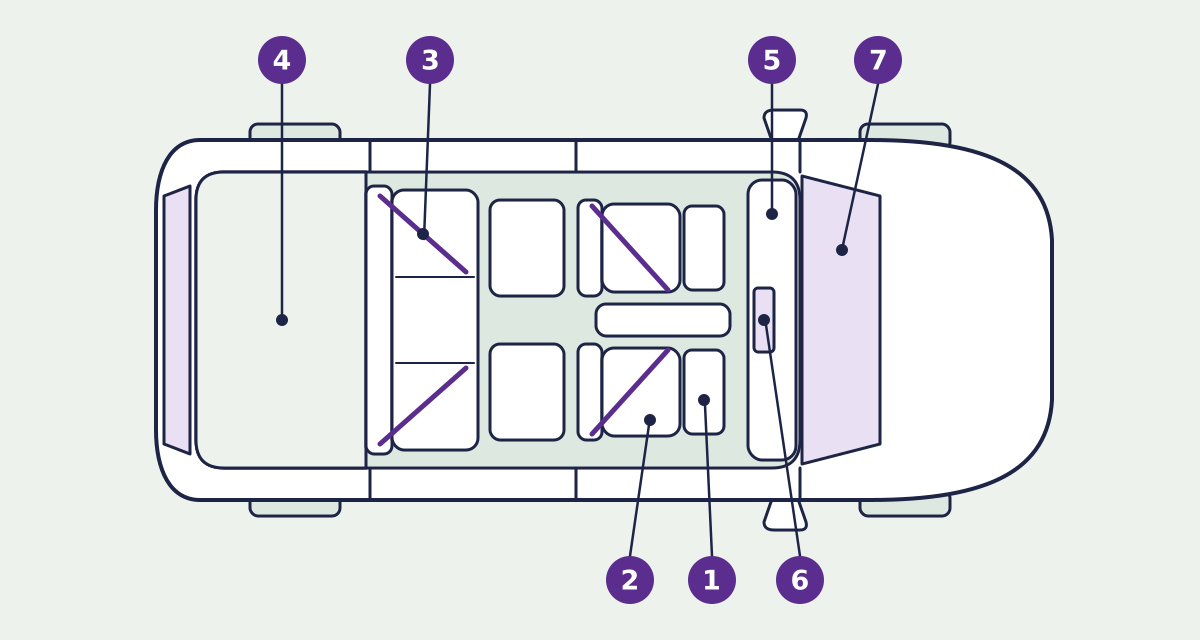
- Inside. Mats out, vacuum, then the seats, the surfaces and the inside of the glass (see the cabin plan further down).
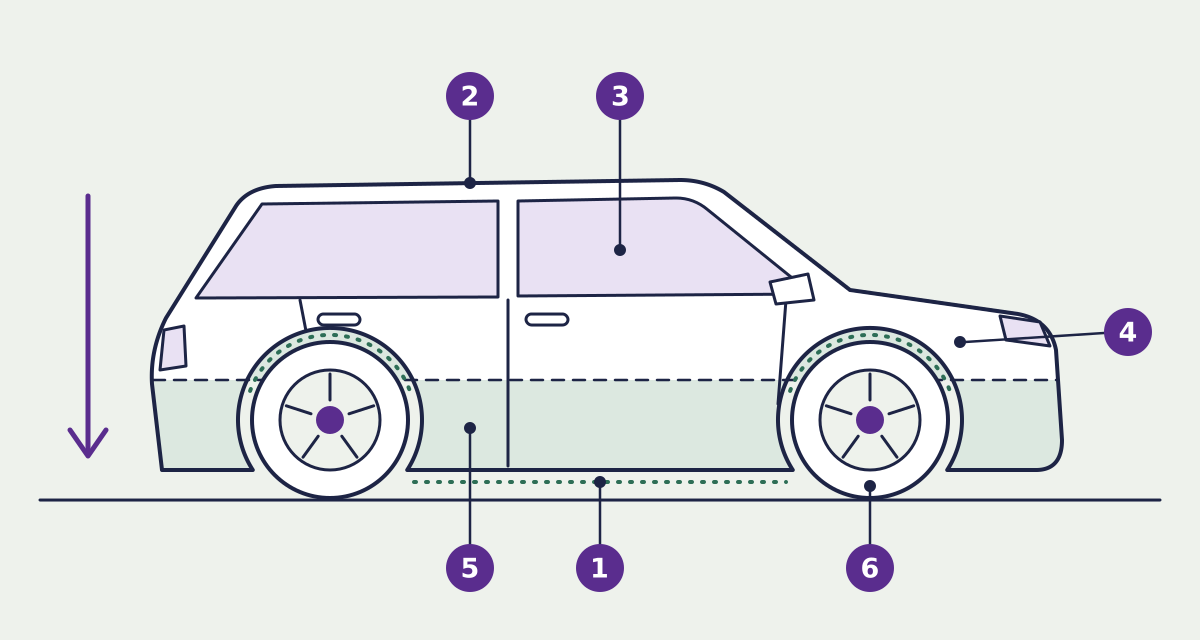
- Underside and wheel arches. A rinse with a hose, aimed from beside the car. Nothing in this guide is done under the car: anything that needs the car raised is work for a mechanic.
- The whole body. A rinse to lift loose grit before anything touches the paint.
- Wash, from the roof down. Shampoo and lukewarm water, one panel at a time. Working from the top down keeps the grittiest dirt, low on the car, from being carried up onto the cleaner panels.
- Wheels and tyres, with their own brush and cloth, which never touch the paint.
- Rinse each panel before the soap dries on it.
- Dry with a clean chamois or a drying towel, then clear the small drain holes along the bottom edge of each door.
- Glass and wiper rubber, outside.
- Wax or sealant, only when the bead test further down says the paint needs it.
Paintwork: rinse, wash, dry
What we look at. The finish. On the body, and on the wheels of some cars, the top layer is a clear coat: a thin, clear layer that carries the gloss. A paint maker’s guide lists what wears a coating over time: humidity, swings in temperature, sunlight, road salt, industrial fallout, bird droppings and tree sap. It adds that gloss fades without regular care.
What it tells us. Two manuals point to the same cause of wash marks: a cloth that is dry, rough or dirty drags grit across the paint (sources 2 and 6). So the first task is to rinse loose grit away with water, and the second is to keep it out of the mitt.
- Rinse first. A full rinse of the body lifts loose dirt before the mitt touches it.
- Wash with a mild car shampoo. Two manuals ask for a mild soap suited to car paint and advise against strong soaps and hot water. The two-bucket method helps here: the mitt is loaded in the shampoo bucket, one panel is washed, and the mitt is rinsed in the plain-water bucket before it goes back into the shampoo. No manual we read describes it; we suggest it because it keeps grit out of the soapy water.
- Rinse before the soap dries. On a warm day, each panel is rinsed as soon as it is washed.
- Dry. With a clean chamois or a drying towel. Water left to dry on paint leaves water marks: the minerals in the water stay behind when it evaporates.
What varies. Manuals differ on dry dusting. One allows it; another says a dry cloth on a dusty car scratches the paint. Where your manual says nothing, we suggest a rinse instead. Whether a pressure washer may be used, and from how far, is set by each manual (see the questions at the end).
What we leave alone. Several manuals advise against water in the engine bay, so the wash stays out of it. Deep scratches, stone chips and dull, weathered paint are work for a body shop: paint repair, machine polishing and chip touch-up are not part of a wash.
Deposits that do not wait
What we look at. Bird droppings, insect remains, tree sap, tar and road salt. Several manuals name these deposits, and one asks for their removal as soon as possible. Another maker’s manual says droppings can harm paint within hours. Heat and sun shorten the time.
How to remove them. The deposit is softened with plenty of water and a soft sponge, as one manual describes, left to soak for a short while, and lifted off once it has softened. It is never scraped or rubbed hard.
Tar and stubborn spots. A tar or spot remover loosens what water does not. It also takes the wax off the patch where it is used, so that patch needs waxing again after the wash.
Salt. After salted roads, one manual asks for a wash sooner than usual. Two manuals ask for the underside and the wheel arches to be rinsed monthly, after driving on unpaved roads and at the end of winter. That rinse is done with a hose from beside the car.
Wheels and tyres
What we look at. Wheels collect brake dust and road salt. On some cars they carry a clear coat like the body’s, and one maker’s manual warns that the wrong cleaner can harm it. Tyres collect road dirt on their sidewalls.
Wheels.
- Only when they are cool, as one manual asks.
- A mild soap or a neutral detergent, and a soft brush. Two manuals ask for no abrasive, acid or alkaline cleaners and no wire brushes. A third adds that some wheel cleaners sold for the purpose, and stiff brushes, can harm the clear coat on the wheels.
- The back of the rims too, as a tyre maker’s guide asks, with a wide-jet nozzle rather than a rotating one.
- Their own brush and cloth. This is our suggestion rather than a manual’s: wheel dirt is gritty and is best kept away from the paint.
Tyres.
- Lukewarm water, a sponge or a nylon-bristle brush, and a mild soap; one tyre maker’s guide names washing-up liquid. A rinse with clean water afterwards.
- No heavy-duty cleaners with solvents or oils, and no dressings or cleaners based on petroleum.
- A dressing, if used, goes on the sidewall only. Nothing that makes the tread slippery goes near it.
Glass, mirrors and wiper blades
Outside. A wiper maker’s factsheet asks for the glass and the rubber of the wiper blades to be cleaned regularly with a moist cloth or sponge. An insect sponge is for the glass only; the blades get a moist cotton cloth. Leaves and grit come off the glass by hand before the wipers are used. The mirror glass can be cleaned together with the windows.
Inside. A film builds up on the inside of the glass over time, and sun on the dashboard plastics adds to it. A glass cleaner removes it, as one maker’s manual describes, applied with a clean microfibre cloth. On the rear window, the cloth moves gently along the heater lines, which are never scraped.
Wax or sealant: when water stops beading
What we look at. How water sits on the paint, after a rinse or in rain. The bonnet and the roof show it most clearly.
What it tells us. Round, high beads mean the layer of wax or sealant is still there. Water that lies flat and spreads in sheets means it has worn away. One maker’s manual says to wax when water no longer beads, so the time to wax is when water stops forming round beads, not a date.

How it is applied. After washing and drying, on cool paint in shade, with a wax that has no abrasives. The label gives how much to use, how long the product is left to set and how it is buffed off.
Which product. A trade association’s recommendation on paint-care products sorts them into groups. Waxes and sealants condition the paint; they are usually free of abrasives and are meant for paint in good condition. Paint cleaners carry many abrasives and are meant for weathered paint. Polishes combine abrasives with a protective part. Only the first group belongs to everyday care; dull or weathered paint goes to a body shop.
What varies. How long a layer lasts. The product label gives its own interval, and sun, frequent washing and salt shorten it. Matt paint is the exception to all of this: one maker’s manual asks for no polish, no wax and no rotating brushes on it.
Inside: vacuum first
What we look at. Loose dust, sand and crumbs on the floor, in the gaps of the seats and in the boot.
- Mats out first. One maker’s manual asks for the mats to be lifted out. They can then be shaken and vacuumed outside the car.
- Vacuum before any product. The same manual asks for the cabin to be vacuumed before any cleaning agent is used. We suggest starting at the seats and working down to the carpet, so that dust does not fall on parts already done.
- No water sprayed into the cabin. Spills are wiped at once. Both points come from another maker’s manual.
- Under the mats. A third manual asks for a check now and then that the carpet under the mats is dry. Where a liquid carried in the car has spilled, the carpet is cleaned, rinsed and dried.
- The boot is vacuumed with the rest of the cabin, and spills there are handled the same way.
- Mats back in. Each mat goes back on its fixings, one mat per footwell. One maker’s manual asks for a single mat on the driver’s side, held on its pins.
Seats and belts
Fabric. The seats are vacuumed first, then cleaned with a mild upholstery soap, as one maker’s manual describes, and fresh spots are treated at once. Any cleaner is tried first on a hidden spot. Another manual asks for no stiff brush, no chlorine bleach and no organic solvents on interior materials. Two further notes come from the manuals: dark dyed clothing can colour the upholstery, and hook-and-loop fasteners on clothing or bags can snag seat fabric.
Leather. The seats are vacuumed first. One maker’s manual gives a mild detergent diluted to about 5%, or a leather cleaner, and asks for the leather to dry in shade. Another asks for a neutral detergent and no strongly acid or alkaline cleaner. The manuals differ on water: one wipes leather with a well-wrung damp cloth, while another asks for no wet cloth on it at all. On that point, the manual of your own car decides. The first maker suggests cleaning and treating leather about twice a year; between those, another maker’s manual asks for leather seats to be wiped often with a dry or soft cloth. Sun and pale colours call for more attention.
Belts. One maker’s manual asks for the webbing to be dabbed with a mild detergent diluted to about 5%, wiped with a well-wrung cloth and left to dry fully before the belt is allowed to retract. Another asks that webbing is never bleached or dyed. A belt that is frayed is work for a qualified mechanic.
Dashboard, controls and screens
Plastics and controls. A lightly damp microfibre cloth. Any cleaner goes on the cloth, never sprayed onto switches or buttons. A stain is dabbed, never scraped or rubbed hard. These steps come from one maker’s manual. Another adds no chlorine bleach, no organic solvents and no stiff brush, and asks for spills to be wiped at once.
The centre screen. One maker’s manual asks for the screen to be switched off and wiped with a clean, dry microfibre cloth, in small circles with light pressure; the cloth may be barely damp if marks remain. The same manual lists what does not belong on it: window cleaner, solvents, ammonia, abrasives, paper towels and tissues.
A head-up display cover. Where a car has one, one maker’s manual asks for a soft, fine cloth of the kind used for eyeglasses, and no detergent.
What varies. Which products a screen accepts. Two manuals list theirs. Your own manual gives the list for your screen, and it comes before anything in this guide.
How often each part needs it
The table gathers the intervals from the sections above. Each one is labelled: "typical" marks a range we give as an illustration, and the other entries name the manuals they come from. The last column gives the source numbers from the list at the end.
| Part | Typical interval | What shortens it | Sources |
|---|---|---|---|
| Droppings, sap, insect remains, tar | Typical: the same day, as soon as seen | Heat, sun | 1, 9, 12 |
| Body wash | Typical: every two to four weeks; several manuals say at least once a month | Road salt, coast air, unpaved roads, parking under trees, industrial fallout | 2, 6, 9, 10 |
| Underside and wheel arches, rinsed from beside the car | Two manuals: monthly, after unpaved roads and at the end of winter | Salted or muddy roads | 6, 9 |
| Wheels and tyres | Typical: with each wash | Brake dust, salt | 6, 9, 10, 14 |
| Wax or sealant | No calendar: when water stops beading; the product label gives its own interval | Sun, frequent washing, salt | 2, 6, 9 |
| Outside glass and wiper rubber | Typical: with each wash, or when smeared | Insects, pollen, sap | 15 |
| Inside glass | Typical: when a film shows | Sun on the plastics | 7 |
| Vacuum and mats | Typical: every two to four weeks (our illustration); the manuals say regularly | Sand, mud, daily use | 7, 11 |
| Plastics, dashboard, screen | Typical: a light wipe when dusty; spills at once | Dust, fingerprints | 3, 11 |
| Fabric seats | Typical: with each vacuum; fresh spots at once | Food, spilled drinks, dark dyed clothing | 7, 11 |
| Leather | One manual: a wipe often with a dry or soft cloth; one maker: clean and treat about twice a year | Sun, pale colours | 4, 7, 9 |
| Seat belts | When soiled | Daily use | 3, 7 |
| Carpet under the mats | One manual: a dryness check now and then | Wet seasons | 8 |
| Boot | Typical: with the cabin vacuum (our illustration) | Loads carried | 8 |
What each method suits, and what it can harm
| Method | Suits | Can harm | Sources |
|---|---|---|---|
| Hand wash: car shampoo, soft mitt, lukewarm water | Every painted panel | The paint, if the mitt carries grit; the finish, if soap dries on it in the sun | 2, 6, 12 |
| Automatic wash with brushes | Cars whose manual allows it | Matt paint (one manual: no rotating brushes); one open-top model’s manual allows no automatic washes | 2, 9 |
| Pressure washer | Rinsing the body, arches and underside from beside the car, at the distance the manual gives | Rubber boots, side-window edges, cameras, sensors, connectors, locks, trim, air intakes, the charging port; one manual allows none | 2, 6, 10, 12 |
| Dry dusting | Light dust, where the manual allows it | The paint: one manual says a dry cloth on dust scratches it | 6, 10 |
| Wax or sealant | Paint in good condition | Matt paint (one manual: no wax) | 2, 9, 16 |
| Polish or paint cleaner, both abrasive | Weathered paint, which is work for a body shop | Paint in good condition, which it thins; matt paint | 9, 16 |
| Tar or spot remover | Tar and spots that water does not lift | The wax on that patch, which is then renewed | 2, 6 |
| Glass cleaner | Glass, inside and out | Centre screens (one manual: no window cleaner); rear-window heater lines, if they are scraped | 7, 11 |
| Damp microfibre | Plastics, controls, and screens when barely damp | Switches, if water or cleaner is sprayed onto them; leather, where the manual says no wet cloth | 7, 11 |
| Upholstery soap | Fabric seats, after a test on a hidden spot | Fabrics that react to it, which the test shows first | 7 |
| Leather cleaner or neutral detergent | Leather, after vacuuming | Leather, if the cleaner is strongly acid or alkaline | 4, 7 |
| Mild soap or neutral detergent with a soft brush | Wheels, when cool | Wheels’ clear coat, if abrasive, acid or alkaline cleaners or wire or stiff brushes are used | 6, 9, 10 |
| Tyre dressing | Tyre sidewalls | The tread, if it makes it slippery; tyres, if it is based on petroleum | 13, 14 |
Questions we get
How often does a car need washing?
Typically every two to four weeks. Several makers’ manuals say at least once a month, and one asks for a wash sooner after salted roads, near the coast, or after tar, soot, droppings, insects or sap. Deposits are a separate matter: they come off as soon as they are seen. The table above gives each part’s typical interval.
Can washing-up liquid go on the paint?
On the tyres, yes: one tyre maker’s care guide names it, with lukewarm water and a brush. On the paint, two makers’ manuals ask for a mild soap suited to car paint and advise against strong soaps. So washing-up liquid belongs on the tyres, and car shampoo on the body.
Is an automatic car wash all right?
It depends on the model, and the manual says. One maker’s manual for an open-top model asks for no automatic washes at all. Another asks for no rotating brushes on matt paint. Where a manual allows automatic washes, its care chapter gives any conditions.
How close can a pressure washer go?
Each manual gives its own answer. One asks for at least 30 cm (12 in) between the nozzle and the car. Another, for matt paint, asks for at least 30 cm (12 in) and a pressure under about 97 bar (1,400 psi). Two others ask for a sufficient distance without giving a figure, and one allows no high-pressure water on its model at all. Two manuals list what the jet is never aimed at: rubber boots, connectors, the edges of the side windows, cameras, sensors, locks, trim, air intakes and, on an electric car, the charging port. One of them asks that the car is never washed with a charging cable connected.
What can go on a touchscreen?
Very little. One maker’s manual asks for a clean, dry microfibre cloth on a switched-off screen, barely damp if marks remain, and lists window cleaner, solvents, ammonia, abrasives, paper towels and tissues as unsuitable. Another maker’s manual asks for an eyeglass-type cloth and no detergent on its head-up display cover. Your own manual gives the list for your screen.
What changes on matt paint?
One maker’s manual asks for no polish, no wax and no rotating brushes on matt paint, and for a pressure washer to stay under about 97 bar (1,400 psi) and at least 30 cm (12 in) away. The bead test in this guide is for gloss paint that is waxed or sealed. On matt paint, the manual’s own section applies in full.
Sources
All pages were seen on 13 November 2026. The numbers match the tables above.
- A car maker’s global owner’s manual, appearance care: what harms the finish (undated)
- The same manual, washing and waxing (undated)
- The same manual, interior care: the cabin and the seat belts (undated)
- The same maker’s manual for another model, leather care (undated)
- The same maker’s manual for a third model, head-up display cover (2023 edition)
- A second car maker’s owner’s manual, exterior care (2023 edition)
- The second maker’s owner’s manual, interior care (2024 edition)
- The second maker’s owner’s manual, under the floor mats (2023 edition)
- A third car maker’s owner’s manual, exterior and interior care (2025 edition): first page and second page
- A fourth car maker’s web owner’s manual, exterior care (model year not shown)
- A fifth car maker’s owner’s manual, centre display care, with the same manual’s pages on plastics, the interior and floor mats (2025 edition)
- The fifth maker’s manual for another model, washing by hand (2026 edition)
- A tyre maker’s sidewall cleaning guide (undated)
- A second tyre maker’s tyre care guide (undated)
- A wiper maker’s factsheet on cleaning the windscreen and wipers (August 2024)
- A detergent trade association’s recommendation on paint-care products for cars, part 2, published in a trade journal (13 April 2022)
- A paint maker’s paintwork aftercare page (2024; only the introduction is public)